Salmon Run in BC: Where to See Spawning Salmon This Fall
Every fall, salmon return from the Pacific to rivers across Vancouver Island to spawn. Around Parksville you don't have to travel far to see them. Several rivers and hatcheries within an hour or so of the resort have good autumn viewing, from chinook in October through to chum and coho later in the season.Goldstream near Victoria gets much of the attention, but it's far from the only place to watch spawning salmon on the Island. If you're staying in Parksville, several of the better spots are a good deal closer.
When does the salmon run happen in BC?
The salmon run isn't one event so much as a series of overlapping arrivals, running from late July into December depending on the river and the species. Salmon spawning in BC draws visitors from across Canada, and the mid-Island rivers get a share of most of the runs that come through.At Stamp Falls near Port Alberni, sockeye are the first major arrival, appearing from late August. At Big Qualicum, pinks can be in the river from late July and chinook from mid-August. Chum and coho are generally the late arrivals, filling rivers across the Island through November and into December. For one window that covers most sites reasonably well, the first half of October through mid-November is a sensible bet.
Where can you see spawning salmon near Parksville?
Six rivers and hatcheries within reach of Parksville hold spawning salmon each fall, and they don't all peak at the same time. For most visitors looking for a salmon run near them, the choice comes down to how far you want to drive and which species you want to see. Timing matters more than picking the best-known river: a site can be fairly quiet in early October and much more active a few weeks later, depending on the species and the conditions that year.
| Where | Drive from Parksville | Species | When to go |
| Englishman River Falls Provincial Park | ~25 min | Chinook, chum, coho | Autumn, roughly Oct-Dec |
| Big Qualicum Hatchery, Qualicum Beach | ~25 min | Pink, chinook, coho, chum | Pinks late Jul-early Oct; Chinook mid-Aug-mid-Oct; coho Oct-Dec; Chum Nov |
| Stamp River Provincial Park (Stamp Falls) | ~1 hr | Sockeye, coho, chinook | Sockeye late Aug-Sep; coho and chinook into Dec |
| Puntledge River Hatchery, Courtenay | ~50 min | Chinook, coho, pink, chum | Mid-Sep to Dec 1st |
| Quinsam River Hatchery, Campbell River | ~1 hr 20min | Chinook, coho, pink | Chinook and coho, Oct-Nov, pinks Sep |
| Goldstream Provincial Park | ~1 hr 35min | Chinook, chum, coho | Late Oct into Dec; best late Oct-Nov |

Englishman River Falls Provincial Park
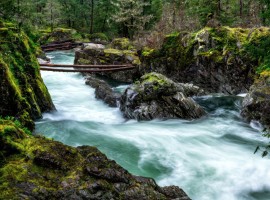
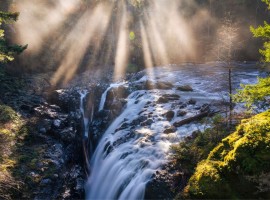
Twenty-five minutes inland along Errington Road, this one fits around the rest of a day. The park has trails on both sides of the water and a deep pool below the lower falls, which BC Parks flags as a good place to watch spawning salmon in autumn. Chinook, chum and coho all use the Englishman, and the fall months are when to look, though the river doesn't publish run timings the way the hatcheries do.
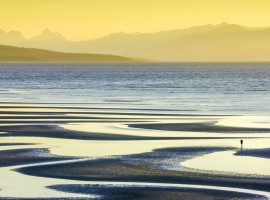
It's the same river that eventually reaches the Salish Sea beside Rathtrevor Beach. We've written more about the falls and the trails around them if the walk is as much the point as the fish.
It's the same river that eventually reaches the Salish Sea beside Rathtrevor Beach. We've written more about the falls and the trails around them if the walk is as much the point as the fish.
Big Qualicum Hatchery, Qualicum Beach
There are two Qualicum hatcheries, and it's Big Qualicum you want. It's on Fisheries Road, about twenty-five minutes north. The viewing area puts you eye to eye with the fish, and there's a display room with a topographical model of the project, public washrooms, a picnic site and nature trails. Self-guided tours run during opening hours; the trails are walkable any time.
Adult salmon are in the river from late July right through to December. Pinks run from late July to early October, chinook from mid-August to mid-October, coho through October into December, and chum in November. DFO puts the best overall viewing in the first two weeks of October. The hatchery is open 7:00 a.m. to 3:00 p.m. daily. The turnoff is north of Qualicum Beach, so the town makes an easy stop on the way back.
Adult salmon are in the river from late July right through to December. Pinks run from late July to early October, chinook from mid-August to mid-October, coho through October into December, and chum in November. DFO puts the best overall viewing in the first two weeks of October. The hatchery is open 7:00 a.m. to 3:00 p.m. daily. The turnoff is north of Qualicum Beach, so the town makes an easy stop on the way back.
Stamp River Provincial Park, Port Alberni
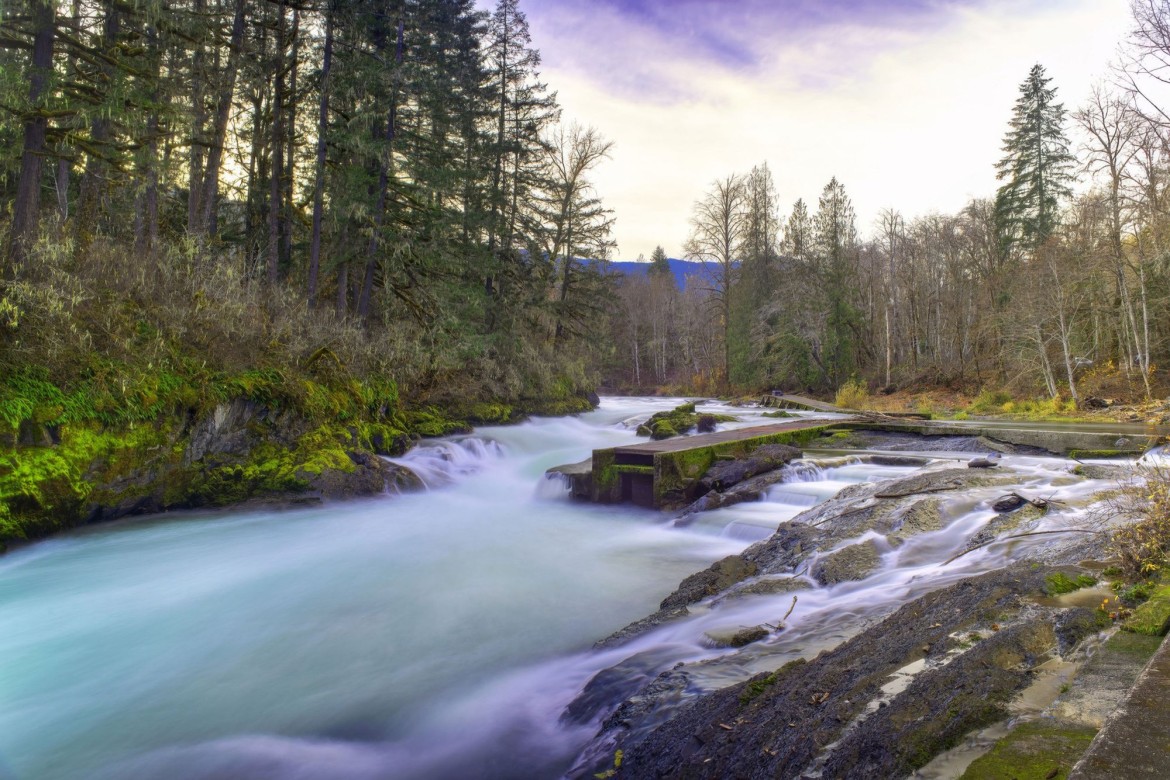
The draw here is the fish ladder. A half-kilometre trail from the day-use parking leads to a waterfall and a viewpoint above the fishway, with interpretive signs explaining what's going on below. Fisheries and Oceans Canada runs the ladder and the Hupačasath First Nation maintains it, and there's a live-stream camera on it, so it's possible to check for activity before making the drive.
Sockeye start arriving in late August. Coho and chinook continue right through to December as they push up to the spawning grounds above the falls.
Sockeye start arriving in late August. Coho and chinook continue right through to December as they push up to the spawning grounds above the falls.
Puntledge River Hatchery, Courtenay
The underwater viewing area makes Puntledge especially useful for anyone who wants a clearer look at the fish rather than shapes in moving water. There are interpretive displays and signs alongside it. The hatchery is open daily from 8:00 a.m. to 3:30 p.m. Viewing runs from mid-September through to 1 December, and chinook, coho, pink and chum all come through.
Nearby, the Puntledge trails, Nymph Falls Nature Park and the riverway paths through Courtenay add more river access, several of them flat and easy going.
Nearby, the Puntledge trails, Nymph Falls Nature Park and the riverway paths through Courtenay add more river access, several of them flat and easy going.
Quinsam River Hatchery, Campbell River
Campbell River calls itself the salmon capital of the world, and the Quinsam hatchery on Argonaut Road is a good place to see why. It's open daily from 8:00 a.m. to 3:30 p.m., with a self-guided tour and pamphlets at the door. Chinook and coho return through October and November.
Pinks arrive in September, but pink salmon follow a two-year life cycle and runs on this part of the Island are generally much stronger in odd-numbered years, so 2026 isn't the year to plan around them. The gate gets locked at 3:30, and anything still in the parking lot stays there until morning.
Pinks arrive in September, but pink salmon follow a two-year life cycle and runs on this part of the Island are generally much stronger in odd-numbered years, so 2026 isn't the year to plan around them. The gate gets locked at 3:30, and anything still in the parking lot stays there until morning.
Is Goldstream worth the drive from Parksville?
Goldstream has park naturalists at the Freeman King Visitor Centre, so it's a good option if you want someone to explain what you're looking at. It's a long way, though, at about an hour and thirty-five minutes each way, and BC Parks notes that parking and traffic around the day-use area get busy during the run.
Spawning there runs from late October into December, with the best viewing in late October and through November. The species are the same chum, coho and chinook that come through rivers within an hour of Parksville. It works better as part of a trip to Victoria than as a day out from here.
Spawning there runs from late October into December, with the best viewing in late October and through November. The species are the same chum, coho and chinook that come through rivers within an hour of Parksville. It works better as part of a trip to Victoria than as a day out from here.

What do spawning salmon actually look like?
Not much like the fish in a shop! Colours shift by species — sockeye go a vivid red with a green head, while chinook, chum and coho turn darker or blotchier — and males develop hooked jaws. Many fish are visibly worn from the journey.
Look for fish holding in slow water, pairs working over gravel, and, with some patience, a female digging a nest with her tail. There will be dead fish along the banks. Unlike steelhead, the five Pacific salmon species found in BC spawn once and die, and the carcasses feed the forest.
Eagles, gulls and sometimes bears follow the run, so keep well back and give any wildlife a wide margin. There's more on what else you might see around Parksville through the year.
Look for fish holding in slow water, pairs working over gravel, and, with some patience, a female digging a nest with her tail. There will be dead fish along the banks. Unlike steelhead, the five Pacific salmon species found in BC spawn once and die, and the carcasses feed the forest.
Eagles, gulls and sometimes bears follow the run, so keep well back and give any wildlife a wide margin. There's more on what else you might see around Parksville through the year.
What should you bring to watch the salmon run?
Rubber boots, because riverbanks in November are mud. Bring polarized sunglasses if you have them, since they cut the surface glare and make it easier to see into the water, and a rain shell, since a lot of the good viewing happens in poor weather. A camera with some zoom helps; a phone will struggle through moving water.
Mornings tend to be easier for light and parking. Keep off the gravel itself, where the eggs are.
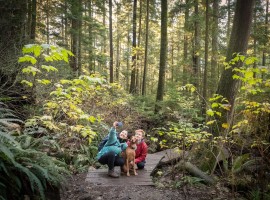
Several of these rivers sit near trails that make a good walk afterwards, so a viewing stop pairs easily with an autumn hike.
Mornings tend to be easier for light and parking. Keep off the gravel itself, where the eggs are.
Several of these rivers sit near trails that make a good walk afterwards, so a viewing stop pairs easily with an autumn hike.
What if the salmon run is late this year?
Runs vary from year to year, and rainfall and river flow can have a major effect on the timing. In dry conditions, low water can delay or even block salmon from reaching the spawning areas, so a dry October can hold fish lower in the system until conditions improve.
If a river looks empty, it's worth trying a second site, since timing between rivers isn't identical, or coming back after a spell of rain. The hatchery sites tend to be a safer bet in a slow year, because the fish concentrate at the fishway.
If a river looks empty, it's worth trying a second site, since timing between rivers isn't identical, or coming back after a spell of rain. The hatchery sites tend to be a safer bet in a slow year, because the fish concentrate at the fishway.

Where to stay to see the salmon run on Vancouver Island
Parksville sits roughly in the middle of all of this. Stamp Falls is about an hour west, the Puntledge about fifty minutes north, Campbell River about eighty minutes, and the Englishman River is twenty-five minutes down the road. That's close enough to spread two or three river days across a stay.
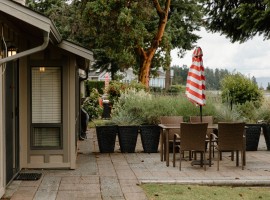
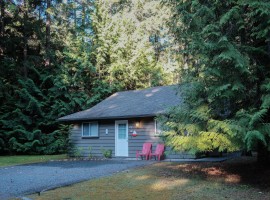
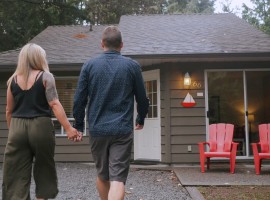
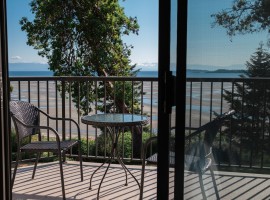
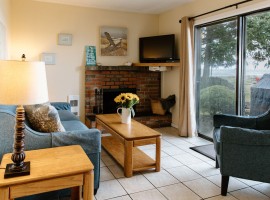
At Beach Acres, our forest cottages are detached and single-storey, set among mature cedar, fir and arbutus a few minutes' walk from Rathtrevor Beach. Each has a full kitchen, a wood or gas fireplace and a patio, and the Black Goose Inn is on the grounds.
River mornings are cold and usually wet, and being twenty-five minutes from the Englishman or Big Qualicum means you can go at first light and still be back for a late breakfast. Boots dry by the fire. October and November are quiet months here, and off-season rates start on 1 October. Have a look at what's open for the weeks you're thinking about.
At Beach Acres, our forest cottages are detached and single-storey, set among mature cedar, fir and arbutus a few minutes' walk from Rathtrevor Beach. Each has a full kitchen, a wood or gas fireplace and a patio, and the Black Goose Inn is on the grounds.
River mornings are cold and usually wet, and being twenty-five minutes from the Englishman or Big Qualicum means you can go at first light and still be back for a late breakfast. Boots dry by the fire. October and November are quiet months here, and off-season rates start on 1 October. Have a look at what's open for the weeks you're thinking about.